The queue, QR check-in and the waiting room screen
One queue, three ways into it: the counter puts somebody in it, a patient scans the QR at the door, or an appointment arrives. Everything downstream — the consultation, the pharmacy, the payment desk — reads the same list.
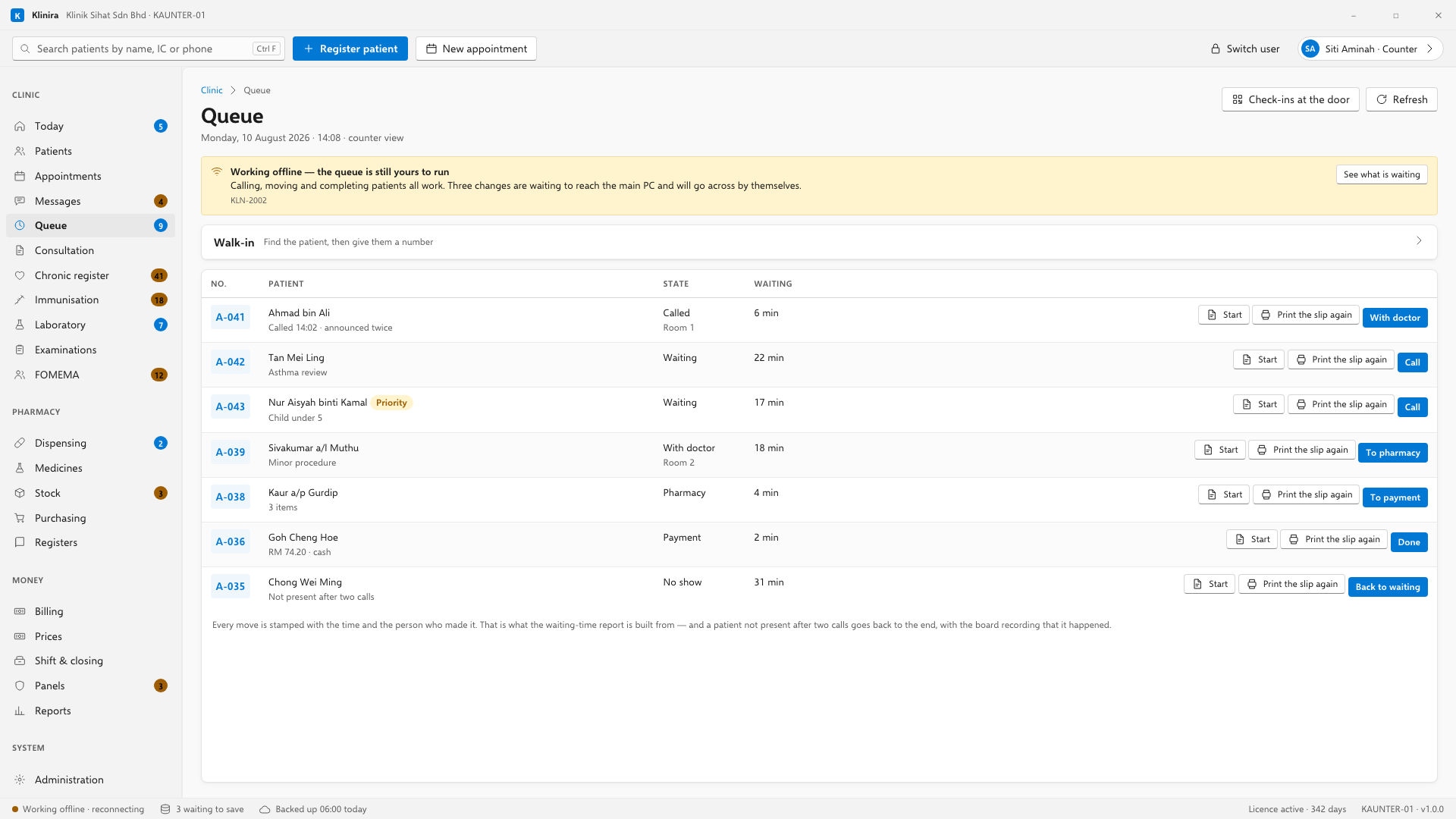
The steps a patient moves through
| Step | Who moves them on |
|---|---|
| Waiting | The counter, when they arrive |
| With the nurse | The nurse, after vitals |
| With the doctor | The doctor, on finishing the consultation |
| At the pharmacy | The pharmacist, when the medicine is handed over |
| At the counter | The counter, when the bill is paid |
When a queue slip is dropped
Every row has Print the slip again. It prints the same number on a fresh slip, marked as a reprint — the patient keeps their place. Issuing them a new number would put them at the back of a queue they have already waited in.
QR check-in
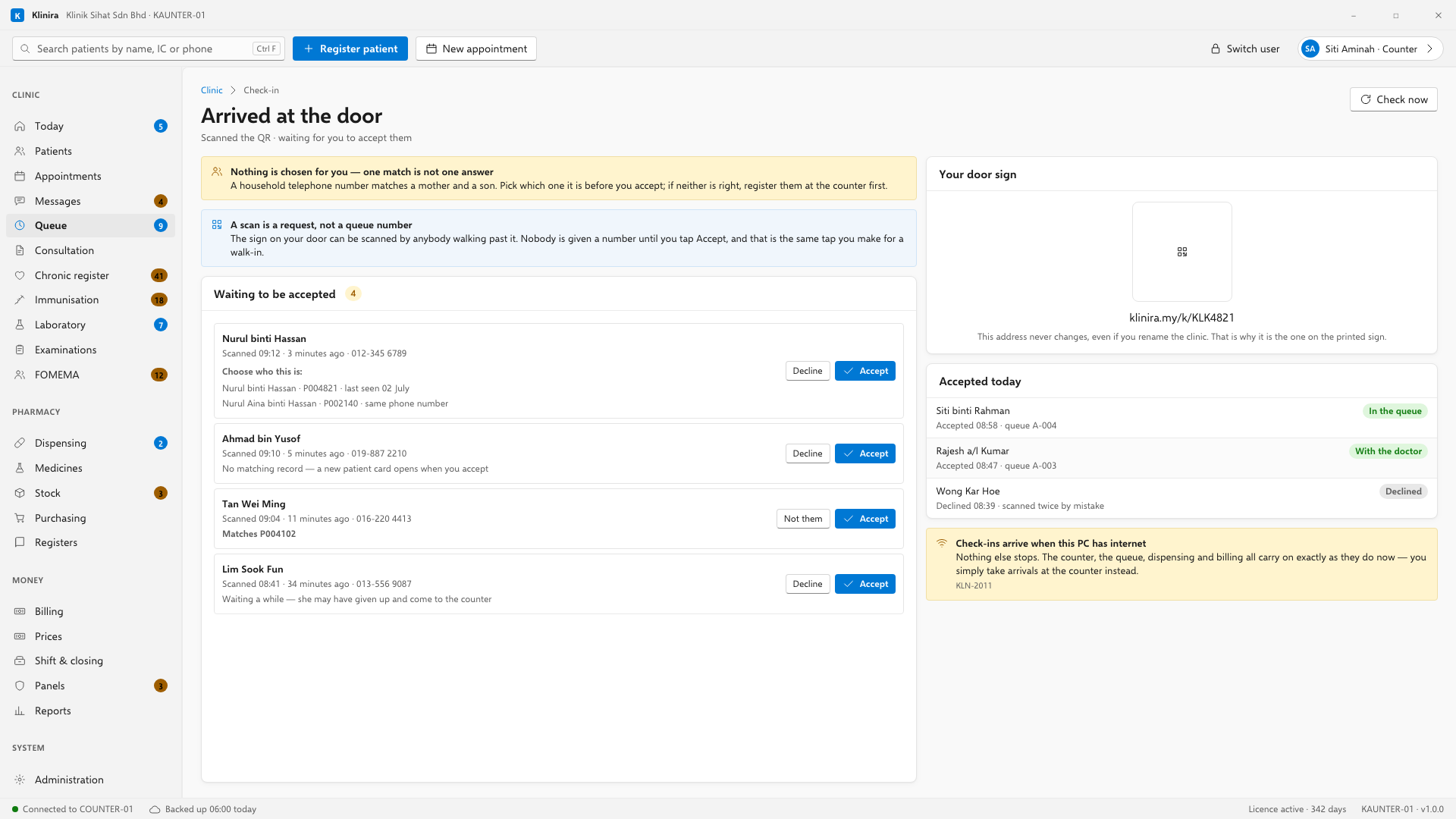
- 1The patient scans the QR at the door and enters their name and telephone.
- 2Their arrival appears on this board. No queue number has been issued yet.
- 3The counter checks the suggested match — or searches, if none is right — and accepts.
- 4The number is issued then, and the patient sees their position on their phone.
Calling a patient in from the car
When a patient who checked in by QR is two ahead in the queue, Klinira sends a WhatsApp message from the clinic's own number. That is how a patient with a small child, or a cough nobody wants to sit beside, waits in the car instead of the waiting room.
- If they have no smartphone, no WhatsApp, or a flat battery, the counter calls the number the way it always has.
- If the internet is down, the position on the patient's phone stops updating — so the page tells them to come to the counter rather than showing a number that might be stale.
The waiting room screen
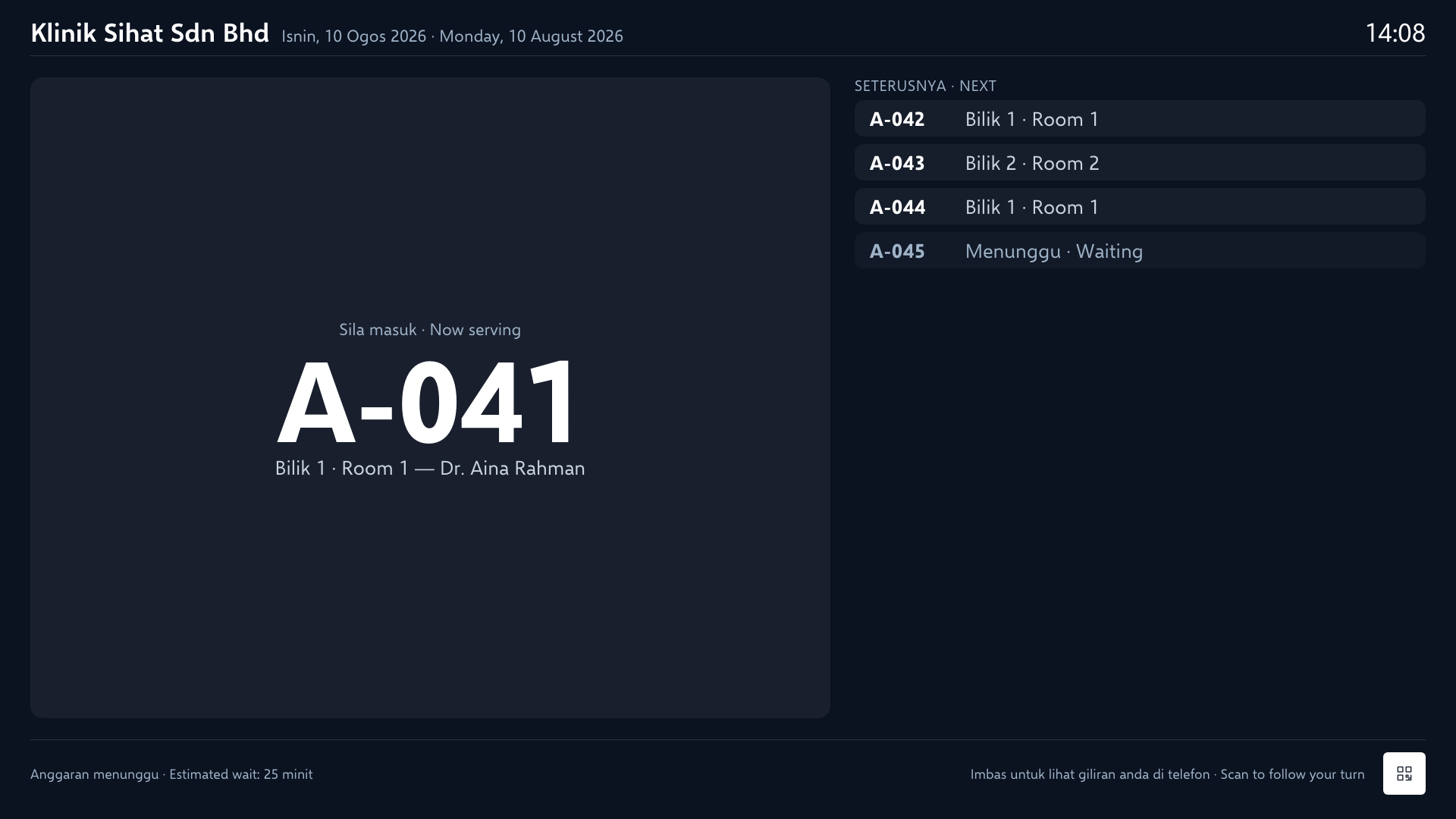
- Any Windows PC with an HDMI cable to a television will run it.
- It reads from the clinic's own server, so it keeps running when the internet is down. A queue screen that goes blank during an outage is exactly when patients notice something is wrong.
- It only ever reads. Nothing on that machine can change a record.
Take a place in the first installs
Klinira is being built now. Leave your details and you will hear what is finished, be asked what your clinic actually needs, and get the first install dates when it is ready.