The chronic disease register
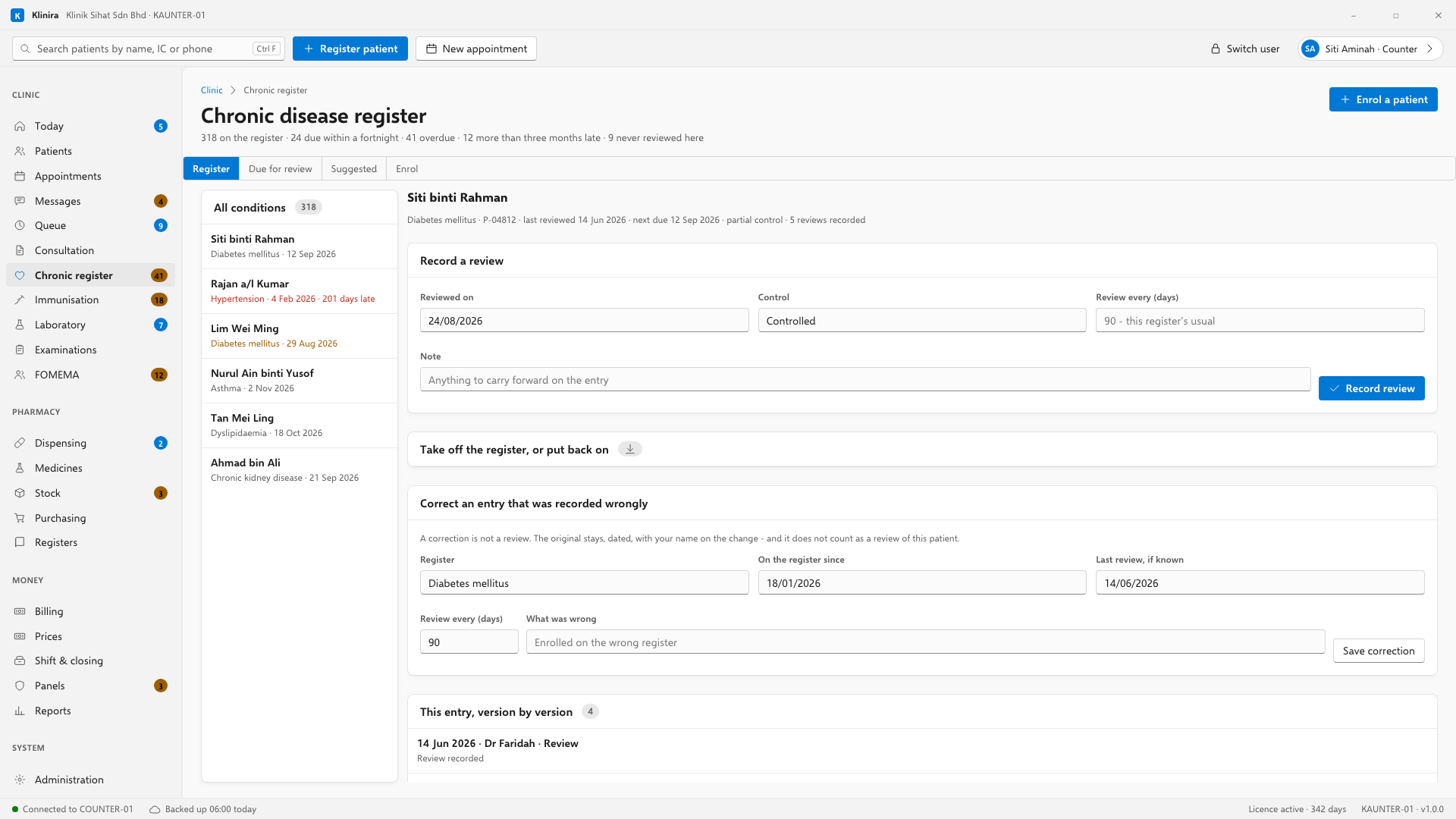
The list of patients you have undertaken to see again, and how often. Mostly diabetes and blood pressure — and the point of it is the other list it produces: who has stopped coming.
If you already keep a paper register
Use the Enrol tab and put the real dates in: the day the patient actually started, and when you last saw them. This matters more than it looks. If you leave both blank, everybody you type in this afternoon falls due on the same day three months from now — including the ones you saw last week — and the recall list is useless from the day you first open it.
The review interval
Each register comes with one already set — three months for diabetes and blood pressure, six for asthma — and the screen tells you which guideline that came from, or says plainly when there is no Malaysian guideline for it. Change it for any patient who needs seeing more or less often. Anything between one week and two years is accepted.
Recording a review
- 1Find the patient on the Register tab.
- 2Put the date of the review, and say whether the condition was controlled.
- 3The next review date moves along by itself. Change the interval here if the doctor wants them back sooner.
| Control | What it means |
|---|---|
| Not assessed | Nobody has reviewed this patient since they went on the register. This is not the same as "not controlled", and the reports keep them apart. |
| Controlled | At target, in the doctor's judgement. Klinira never works this out from a reading. |
| Partial | Improving, or at target on some things and not others. |
| Uncontrolled | Not at target. Usually a reason to shorten the interval. |
Taking somebody off the register
It takes a reason, and the reason is the whole point. Write what actually happened — moved to another clinic, no longer has the condition — because in three years that sentence is all there is. You can put somebody back on afterwards; a condition in remission that comes back is common, and Klinira will not make you enrol them a second time.
Calling patients back
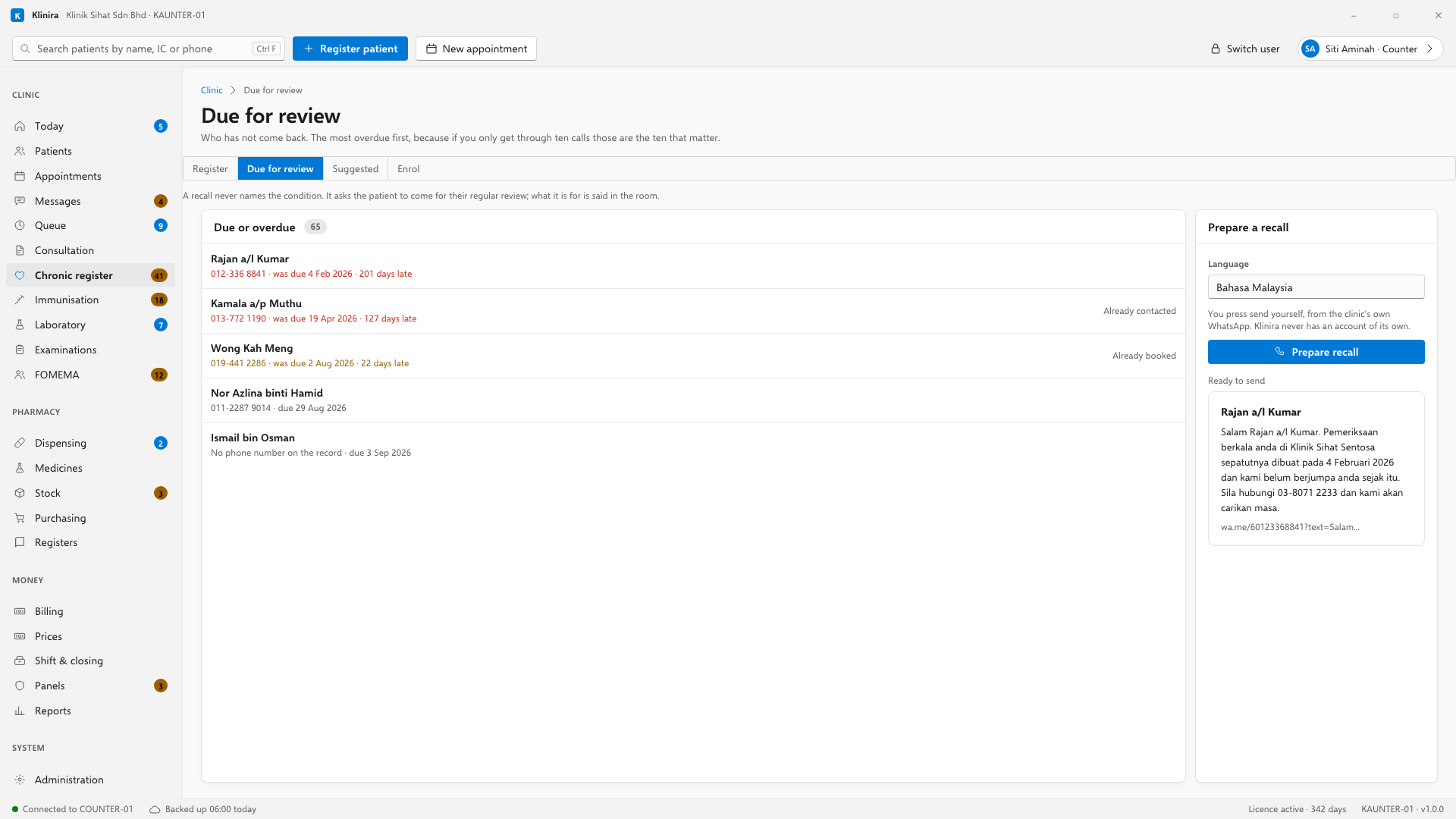
This is the counter's list, and it is worth ten minutes a day. The patient the clinic has most nearly lost is at the top, because if you only get through ten calls those are the ten that matter.
- "Already contacted" means a message has been prepared for that patient in the last two months. Skip them.
- "Already booked" means they have an appointment coming. You can skip them too, but they stay on the list — an appointment can be cancelled, and then the review would be forgotten.
- A patient with no phone number on the record cannot be sent anything. Telephone them, or add a number to their record.
The two reports
- Chronic disease register — how many patients on each register, and how they are doing. "Not assessed" has its own column, so your admin backlog never reads as a clinical result.
- Overdue chronic follow-ups — every patient past their review date, with their phone number, ready to print and work down.
Take a place in the first installs
Klinira is being built now. Leave your details and you will hear what is finished, be asked what your clinic actually needs, and get the first install dates when it is ready.